Tuesday, February 10, 2009

Some Simple Portfolio Ideas


For some interesting portfolio ideas largely based on the indexing approach, check out "Three Simple Portfolios" by Bob Frick, senior editor of Kiplinger's Personal Finance.

Bob Frick's investment advice strongly echoes that of John Bogle:
You can beat the great majority of investment professionals by employing simple strategies that use low-cost index funds. Index funds track a broad swath of the stock market, such as big-company stocks, small-company stocks, emerging-markets stocks, and so on.

Some of the biggest brains in the world of finance - from Nobel Prize-winning professors, such as William F. Sharpe, to, arguably, the greatest money manager of our time, Warren Buffett - advocate a "passive" style of investing epitomized by index funds.

The evidence seems to back up these intellectual heavyweights. Over the past 15 years through December 31, Standard & Poor's 500-stock index performed better than 71% of mutual fund managers who specialize in the stocks of large U.S. companies.

How well have you done by picking managers who actively buy and sell securities? It's true that some fund managers can beat their relevant index. But as Princeton professor Burton Malkiel asserts in his famous book, A Random Walk Down Wall Street, there's no good way to "find such skill before it has been demonstrated over time."

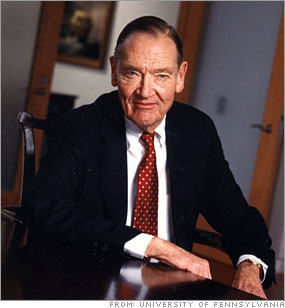
Smart Investing for the Long Term

So you want to invest intelligently for the long term, but the stock market is going nuts. Take some advice from John Bogle. Two words: index funds.

Bogle is the anti-Cramer. He does not pick stocks. He owns everything through low cost, diversified index funds, even in today's wild and crazy stock market. Such a strategy is definitely the best approach for the average investor.

As Bogle recommends in "Six Lessons for Investors," an incredible January 8, 2009, Wall Street Journal editorial:
Owning the market remains the strategy of choice. Such a strategy guarantees a return that lags the market return by a minuscule amount, and exceeds the return captured by active equity-fund managers as a group by a substantial amount. Why? Because the heavy costs incurred by investors in actively managed equity funds can easily amount to 2% to 3% annually...

As a group, investors are by definition indexers. (That is, they own the entire market.) So indexing wins, not because markets are efficient (sometimes they are, sometimes they are not), but because its all-in annual costs amount to as little as 0.1% to 0.2%.

Indexing won in 2008 by an especially wide margin. Low-cost, low-turnover, no-load S&P 500 index funds outpaced nearly 70% of all equity funds, and (admittedly a fairer comparison) more than 60% of all funds focused on large-cap U.S. stocks. This continues the pattern - with some variations - that goes back to the start of the first index fund 33 years ago...

In sum, active management strategies as a group lose because they are expensive. Passive indexing strategies win because they are cheap.
So forget Jim Cramer. Think John Bogle.

Jim Cramer of CNBC Is Dangerous

By convincing average investors that they can use their retirement money or savings to trade stocks, Cramer does serious harm. As this great Barron's article demonstrates, Cramer is an awful stock picker. What is the lesson learned? It is extremely difficult for even the most talented money managers to beat the market. Besides, Cramer is not even that talented. Average investors are better off investing in a low cost index fund. Cramer may be entertaining, but he is dangerous.

According to Barron's:

Cramer's recommendations underperform the market by most measures. From May to December of last year, for example, the market lost about 30%. Heeding Cramer's Buys and Sells would have added another five percentage points to that loss, according to our latest tally.

To his credit, Cramer's Sells "made money" by outperforming the market on the downside by as much as five percentage points (depending on the holding period and benchmark). His Buys, however, lost up to 10 percentage points more than the market.

These batting averages represent his stock-picking over a stretch of time, but Cramer is wildly inconsistent, and the performance of individual picks varies widely. So widely, in fact, that it is impossible to know with confidence that any sample of Cramer's recommendations will enable you to outperform the market.

These facts don't mean that viewers should avoid his informative and entertaining show - they should just be wary of his stock picks.